
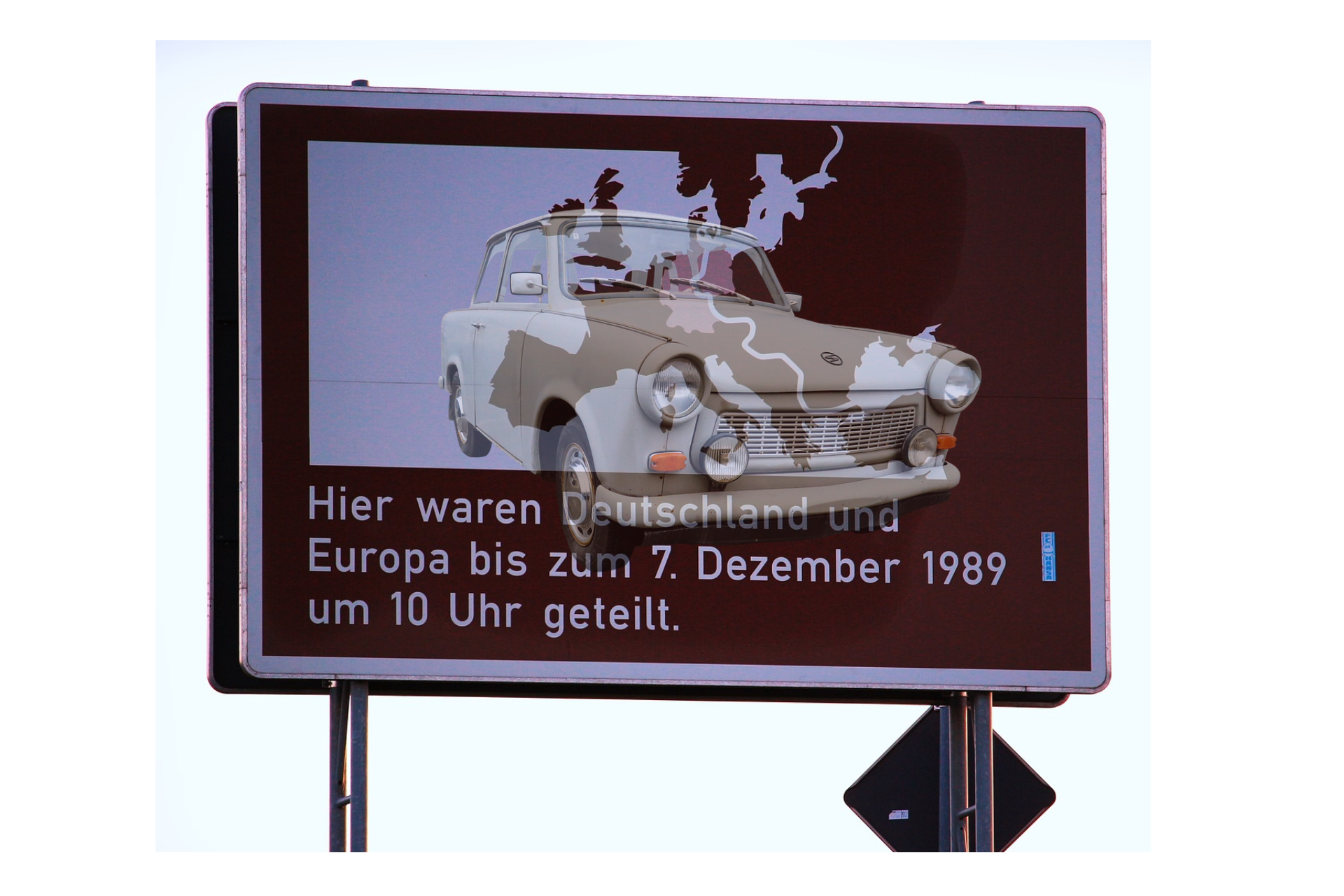
Photo credit:Imagen de G.C. and rihaij ( Pixabay)
German reunification, a unity that is less
After the elections in Thuringia, Saxony, Brandenburg and now Austria, the far right is growing. In eastern Germany, it reflects the fact that the unity of the country was not carried out perfectly: Soon it will be 34 years since German reunification. However, it is not a true reunification, as East Germany (the former GDR) operates autonomously from the rest of Germany.Soon it will be 34 years since German reunification. However, it is not a true reunification, as East Germany (the former GDR) operates autonomously from the rest of Germany. An example of this is the unstoppable rise of the far-right
December 3rd’s German Unity Day serves as a starting point for reflecting on the current situation in Eastern Europe. Germany’s unity provides a contrasting example as we delve into its history.
Let’s step back in time to Germany, 1871 when the German Empire (Deutsches Reich, II) emerged after Germany’s victory over France in the Franco-Prussian War. Chancellor Otto von Bismarck’s diplomatic prowess and patience had led Germany to the height of power on the continent. However, as history reveals, much could go awry. Unfortunately, Wilhelm II eventually removed Bismarck from office, losing a remarkable statesman and sending foreign policy into turmoil. This move undermined the alliances that Bismarck had meticulously constructed to uphold Germany’s stability in international relations and prevent potential threats.
The territorial losses of Germany in the two World Wars.
This led Germany into World War I, which was concluded, according to the peace treaties, especially the Treaty of Versailles (1919), with the result of territorial losses.
Versailles in 1919 imposed territorial losses on Germany .These losses, though painful, were initially manageable, given that some of them were relatively recent acquisitions. However, they laid the groundwork for the Second World War and subjected Germany to harsh reparations that hindered their economic recovery.
Poorly drafted, the peace treaties paved the way for World War II and humiliated Germany, which was blamed for the conflict and then subjected to harsh reparations that undermined its own interests: The emergence of Hitler was brewing, and nowadays he would be viewed as a populist who was willing to stoke resentment within the German people against the Western powers.
The aggressive expansionist policies of Adolf Hitler in the lead-up to the Second World War, such as the annexation of Austria and the occupation of Czechoslovakia, further increased tensions. When Germany invaded Poland, the United Kingdom and France declared war on Germany. The Second World War resulted in even more significant territorial losses for Germany, including the amputation of approximately 25% of its pre-war territory, the division of the country and territorial adjustments in favour of Poland and the Soviet Union. Furthermore, Germany remained split into two parts, and its capital was subjected to different military occupation rules based on the areas governed by the Soviets or the remaining Allies up until 1990.
The pain of these territorial losses left a lasting impact on the German people, including those who strongly opposed the Nazi regime. Losing territories unrelated to the war was especially hard to accept.
Two Plus Four Agreement: The German reunification
Also known as the Treaty on the Final Settlement with Respect to Germany, this agreement was signed in 1990 after the end of the Cold War, the dissolution of the USSR, and Germany’s regaining of sovereignty. The agreement involved both Germanys, the United States, the United Kingdom, France, and the USSR. The Soviets sought Western credits to alleviate their difficulties, and a young KGB agent, Vladimir Vladimorovich Putin, stationed in Germany, requested tanks but was unsuccessful. Following Germany’s reunification, the East Germans enjoyed «freedom and capitalism» but also faced unemployment due to economic restructuring. The Treuhandanstalt (THA), responsible for managing state-owned companies in former East Germany, resulted in widespread layoffs. Detlev Rohwedder, the leader of the Treuhandanstalt (THA), was murdered in 1991. This period of unrest is explored in the Netflix documentary «Detlev Rohwedder: A Perfect Crime».
Perhaps the initial dissatisfaction in East Germany, referred to as the «Neue Bundesländer «new federal states,» contributed to the situation where the far-right is flourishing and pro-Nazi opinions are more pronounced. To add another example, those of us residing in what was earlier West Germany are still charged a tax called the «Solidarity Surcharge,» which was enforced to defray the expenses of absorbing the GDR. Initially intended as a temporary measure in 1991, it still exists today, catering primarily to higher-income earners.
Another unique feature is the German constitution, officially known as the «Basic Law» (Grundgesetz), established under Allied occupation after World War II, without constituent assembly elections or a popular referendum. Despite reunification, this legal document remains in use, though constitutional bodies refer to it as the «Constitution» (Verfassung). In essence, it is a state possessing unity but lacking 25% of its historical territories, and governed by a constitution that doesn’t technically qualify as such. Needless to say, this is not a standard scenario. Therefore, upon hearing of reunification, some older Germans may have little to rejoice about.
Eastern Europe: Few Opportunities for Greatness and the Triumph of Populism
As previously discussed, Germans and Austrians have had their moments in the spotlight in the past, but their attempts to regain their power and influence were ultimately unsuccessful. Unfortunately, their involvement in historical events such as the Holocaust has left a dark mark. They have realized that pursuing the construction of an empire or the recovery of lost greatness leads to undesirable consequences. Germany has moved beyond division and now prioritises stability over grandeur. Nevertheless, there are anxieties regarding the rise of populism in specific Eastern European countries, for instance, Austria since a decade.
The Key: «I Want My Glory Too»
To begin with, the notion of a nation being «great» can often create discomfort as it commonly implies that the greatness of few is achieved at the cost of others, as demonstrated in slogans such as «Make America Great Again» by Donald Trump.
now broach the subject of those «others.» Several countries in Eastern Europe never had the opportunity to aspire to greatness. They couldn’t have had hegemonic ambitions; indeed, they frequently endured mistreatment from others. Poland was once a part of the Polish-Lithuanian Commonwealth, which was among Europe’s largest and most affluent states in the 16th, 17th and part of the 18th centuries. However, it was partitioned and lost its territories. After Germany, Russia, and Austria-Hungary were defeated in World War I, Poland could finally take a breath. However, the terror of Nazism arrived soon after, serving as a reminder that things could always deteriorate. This resulted in World War II and, without any say, they transformed into satellite states of the USSR, just as they were beginning to aspire for triumph once more.
Hungary has a comparable tale. After the Austro-Hungarian Compromise of 1867 (Ausgleich), they were granted their share of the empire, governing present-day Hungary, Slovakia, Croatia, Slavonia, and a large part of Romania. But then came World War I, causing the collapse and dissolution of the Austro-Hungarian Empire, ultimately reducing Hungary to a state of insignificance.
When these states emerged from Soviet influence, they lacked a glorious past to reflect on. As a result, they invented or mythologised one, magnifying a particular period. Unable to regain lost territories or former glory, they resorted to supposed essences and traditions, formulating retro-utopias as previously mentioned in another post.
Fast forward to 2023, Poland is emerging as a regional military power due to the conflict in Ukraine, despite its inability to regain its lost territories. It is better than nothing. However, Hungary has yet to make significant progress beyond passionate rhetoric.