
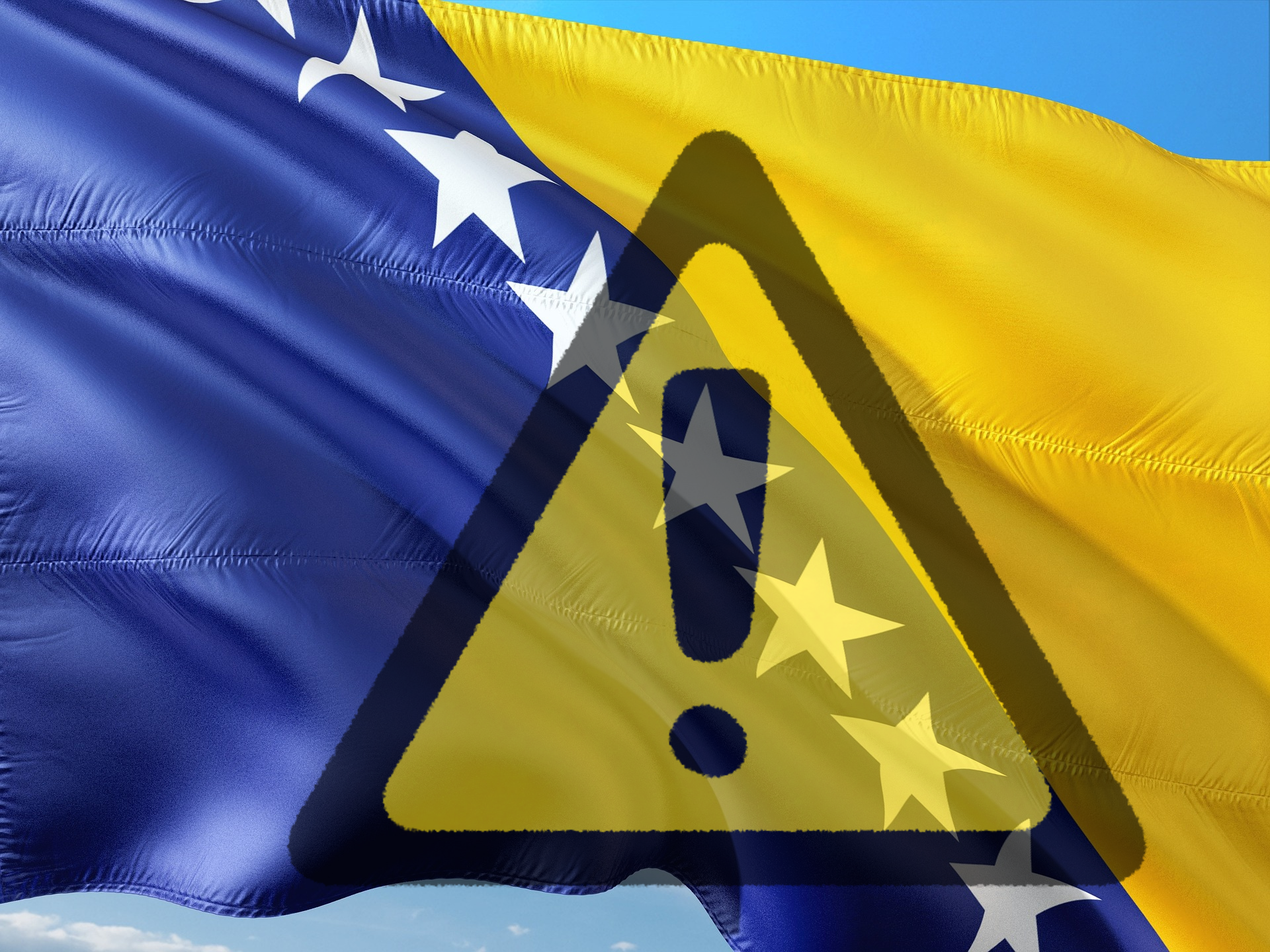
El reto reside en aumentar la participación, lastrada por la desconfianza ciudadana a causa de la parálisis institucional y el aumento del autoritarismo que alejan a BiH del sueño de la Unión Europea. Los rescoldos de las guerras étnicas se avivan más que nunca.
El día de junio de 2026 en que los preconteos —provisionales pero tozudos— daban la victoria en Colombia al abogado ultraderechista Abelardo de la Espriella, un cesado Milorad Dodik imponía su voluntad en la República Srpska (RS) con su férrea mano de antiguo político de segunda fila.
Si Abelardo pasa por el Trump colombiano, el bosnio es su doppelganger balcánico: ultranacionalismo, desprecio por las instituciones federales limitadoras de su poder, comunicación política provocadora, victimista y faltona.
Crónica de una destitución precocinada
Ahora bien: ¿cómo se había recalado a la situación descrita? La respuesta viene dada por el pulso que Dodik declaró al Estado, en especial, contra la máxima autoridad sobre el papel: el Alto Representante Internacional para Bosnia (OHR), personalizado en la figura de Christian Schmidt. El Parlamento de la RS promulgó en 2023 una legislación para hacer decaer la eficacia de las decisiones (federales) del Tribunal Constitucional de Bosnia y Herzegovina (BiH) y las decisiones del OHR en la RS, apostillando la insubordinación con el aserto—por si cupiera asomo e duda— de que BiH había dejado de existir.
Schmidt dejó sin efecto tal decisión, pero se encontraba en una comprometida situación con un Dodik desafiante, que cuenta con gran apoyo en la RS y fuera (Trump). Su posición no era la de Carlos Westendorp en 1999, con un EEUU comprometido con lo que se había pactado en Dayton (1995). Schmidt dejó hacer a las instituciones federales reservándose la engorrosa carta de la destitución si no funcionaba.
El alemán caía, no obstante, sobre red y había puesto sus barbas a remojar procedió a modificar en 2023 el Código Penal bosnio, e introdujo penas para aquel que desafiara la autoridad del OHR, pensado para Dodik. Es en este contexto cuando en 2023 la fiscalía bosnia abre un procedimiento contra el líder serbobosnio (firmante de las leyes) y el Tribunal de BiH lo condena, en febrero de 2025, a un año de prisión y seis de inhabilitación para ejercer el cargo de presidente, sentencia que deviene firme al ser confirmada por el Tribunal de apelación de BIH, y ejecutada por la Comisión Electoral Central de BiH (CIK) en agosto de ese mismo año. Dodik sale en ese momento de la presidencia, pero poco importa: sigue ejerciendo en la sombra, y designa en junio de 2026 a “sus” candidatos: Siniša Karan para la presidencia de la RS y Željka Cvijanović para el puesto serbio en la presidencia federal.
Una paz quebradiza
BiH es un complejo entramado étnico fruto de los acuerdos de Dayton, firmados en 1995 entre los líderes bosníacos, serbios y croatas ¿Frágil? sí, pero funcionó durante casi tres décadas. Richard Holbrooke, uno de sus artífices, no era tan ingenuo para negar las debilidades: congeló las causas del conflicto sin abordarlas, aunque siempre sostuvo que resultó el mejor acuerdo posible para poner fin a la guerra. De hecho, la RS se creó allí, al calor de la depuración étnica. Dayton pretendía conjurarla, pero acabó, paradójicamente, institucionalizándola.
Se instauró una BiH federal dividida en dos entidades principales —la Federación croato-bosníaca y la RS— y una tercera, el distrito multiétnico de Brčko, que parte en dos el territorio de la RS. Es un sistema de democracia consociacional: garantiza la representación de los llamados “tres pueblos constituyentes” —serbios, croatas y bosníacos— en las instituciones federales, con un OHR que supervisa el conjunto. En suma: su subsistencia dependía —y depende— de una supervisión y compromiso internacional constantes y de que las entidades aceptaran —y acepten—las reglas: que no se jugara con fuego. Giro de 180 grados: a Dodik le gustan los fósforos y a Trump, Dodik.
Ganancias en río revuelto
Dodik no fue siempre así. En 1998, el ecosistema político de la RS era opresivo. La guerra había durado tres años y medio y el asedio de Sarajevo se levantó en febrero de 1996. Radovan Karadžić (del Partido democrático de Serbia, SDS) gobernó la RS post Dayton hasta dimitir por estar acusado por el Tribunal Penal Internacional para la antigua Yugoslavia (TPIY). Hoy cumple cadena perpetua por genocidio y otros crímenes.
Ocupó su lugar Biljana Plavšić, aunque Karadžić seguía al mando. Pero Plavšić rompió con el SDS y fundó su propio partido, la Alianza Nacional Serbia (SNS), un nacionalismo más moderado, aunque de boquilla: acusada por el TPIY, eludió cargos de genocidio y otros a cambio de mostrar “arrepentimiento”. Otros políticos del momento eran Gojko Kličković (SDS), del entorno de Karadžić, y Nikola Poplašen (del Partido Radical Serbio de la RS, SRS RS), aún más ultramontano; la cuestión era elegir a la persona menos dañina para gestionar la paz.
La carambola de la llegada al poder
Es en este contexto que entra en juego Dodik. Entre 1997 y 1998, su Partido de los Socialdemócratas Independientes (SNSD) no despuntaba en el tablero. Pero su suerte iba a cambiar. En 1997, las legislativas anticipadas en la RS arrojaron un Parlamento fragmentado dominado por el SDS. Por el contrario, Dodik exultaba mesura en un clima ultra: su perfil era poco ideológico, de gestor, alejado del ejército y del radicalismo serbobosnio: no era poco, si bien vegetaba en la irrelevancia: muchos observadores electorales ni lo mencionan. No así Occidente y la UE: era una cara joven, “un soplo de aire fresco” ―decía de él la diplomática estadounidense Madeleine Albright—. No era una señora cualquiera. En un principio, no fue ni Madeleine ni estadounidense: sino una niña checoslovaca llamada Marie Jana Korbelová que sabía de guerras y posguerras. Con dos años huyó de la ocupación nazi; con once, de la Checoslovaquia comunista hacia Estados Unidos. Eslava como Dodik, occidental como EEUU y la UE.
Dodik era el tipo: chovinista serbobosnio, pero no vinculado a la guerra y sus crímenes y contrario a Karadžić y Mladić quienes, en opinión de la joven “promesa”, debían ser extraditados al TPIY
La entente entre el SDS y el SRS RS no podía gobernar. Plavšić, figura ligada a Karadžić durante la guerra, se convirtió en la interlocutora estrella de Occidente. La mayoría alternativa se articuló, entonces, en torno a la alianza parlamentaria Sloga (Unidad), integrada por el SNS de Plavšić, los socialistas (SPRS) de Radišić, y formaciones croatas y bosníacas, incluso ―rara avis― un partido multiétnico con dos escaños, los mismos que tenía Dodik. Los coaligados sólo tenían en común la meta: desalojar del poder al SDS/SRS RS. Plavšić estaba descartada por su pasado, por lo que urgía alguien potable para el OHR, EEUU y la OSCE: Dodik era el tipo: chovinista serbobosnio, pero no vinculado a la guerra y sus crímenes y contrario a Karadžić y Mladić quienes, en opinión de la joven “promesa”, debían ser extraditados al TPIY. A ello se añadía un discurso reformista, sin perfil antioccidental. No molestaba a nadie porque no era nadie. Así, Plavšić podía tolerar que colocaran a un mindundi con buena imagen, pero no una amenaza ― o eso pensaba― a la espera de tiempos mejores que nunca llegaron.
El cuatrienio moderado-reformista (1998-2001)
De este modo, Dodik, figura de consenso en aquella irrespirable atmósfera, fue elegido primer ministro, aunque se imponía una feroz cohabitación con el presidente de la RS, el radical Poplašen, quien maniobró para lograr la destitución de Dodik —pese a no tener mayoría en la asamblea—, excediendo sus competencias y poniendo en peligro la aplicación de los acuerdos de paz. El OHR, en aquel momento el español Carlos Westendorp, cesó a Poplašen 1999 por cuestionar su autoridad —tal y como hace Dodik en la actualidad—. Puedo hacerlo gracias a los “Poderes de Bonn” (1997), que habían ampliado las funciones del OHR, certificando el protectorado internacional sobre BiH.
Dodik gobernó imprimiendo pragmatismo y reformismo: reemplazó a los más vinculados con el extremismo, promovió el retorno de los desplazados por la limpieza étnica y posibilitó el marco daytoniano.
El aire fresco se emponzoña
Las elecciones de 2000 apearon a Dodik del poder y pasó a formar parte de la oposición, en un contexto de unas instituciones dominadas por el radicalismo del SDS. Dodik toma nota, aparca la moderación, y se reformula como nuevo campeón de la serbobosnicidad: la federación de BiH pasó a convertirse en su enemigo. Tras las elecciones de 2006, con dicho bagaje, el otrora minúsculo SNSD reaparece preponderante en la Asamblea, la presidencia de la RS (2010 y 2022) y la presidencia tripartita de BiH (2018). Y se confirma: Dodik se ha independizado de un Parlamento que lo ataba en corto y ahora es él quien corta el bacalao. Se inicia entonces un pulso constitucional al Estado en el que su antiguo protector ―el OHR, encarnado en 2021 por Schmidt― se pone en el centro de la diana por ser la instancia que aún lo suelda a BiH. Dodik ha estado usando la condena para victimizarse. Además, ha estado tirando de padrinos: y quien mejor que su némesis transatlántica, Trump
Como a Poplašen en 1999, el OHR lo licencia―vía penal arriba descrita― por sus constantes desafíos, provocaciones e insubordinaciones. Desde entonces Dodik ha estado usando la condena para victimizarse. Además, ha estado tirando de padrinos: y quien mejor que su némesis transatlántica, Trump. El mandatario estadounidense había levantado las sanciones a Dodik y a su círculo en 2025, rompiendo así el consenso occidental en aislarlo. ¿Recuerdan el bochorno mundialístico de la retirada de la tarjeta roja? Pues eso.
El árbitro casero
Todo este proceso culmina con la dimisión de Christian Schmidt en mayo de 2026, quien esgrimió improbables “motivos personales”: era de dominio público que la presión de Washington fue decisiva. Eso sí, para Trump, que practica una diplomacia transaccional, todo tiene un precio: los intereses en el rubro energético bosnio —en concreto, el gasoducto Southern Interconnection entre BiH y Croacia— de empresas próximas a él y sus colaboradores. Con este movimiento, el presidente estadounidense se saltaba la regla no escrita por la cual el OHR cae en manos europeas y la seguridad en manos estadounidenses. El objetivo es claro: reducir la influencia europea en Bosnia, y eso pasa por recortar las atribuciones del OHR —acusado de extralimitación— y el ascendente europeo en toda una región de países candidatos a la UE.
Hay prisa: las elecciones de octubre en BiH y las elecciones de medio mandato de noviembre en Estados Unidos, en las que Trump podría perder su mayoría en el Congreso, están a la vuelta de la esquina. Para dirigir el OHR EEUU se inclina por el diplomático italiano Antonio Zanardi: sin experiencia en Bosnia; pero sí en Serbia, “madre patria” a la que sueña unirse Dodik. EEUU necesita un OHR más débil; la UE, lo contrario, y apuesta por René Torcaz.,La elección es importante: un OHR débil puede descoser aún más BiH. Una Bosnia en llamas, además, frenaría su camino a la UE, algo conveniente para EEUU y el Kremlin.Entre tanto, se opta por una solución de “compromiso” y se ha nombrado a Louis J. Crishock, antiguo OHR adjunto —número 2— como OHR en funciones (otra regla no escrita: los “número dos” solían ser estadounidenses). A Dodik es palmario que esta escaramuza en la pequeña esquina del gran juego le beneficia.
Algunos europeos, entre los que se cuentan dos ex-OHR abogan por su disolución y la asunción de sus funciones por la Unión Europea en el marco de una paulatina integración del país en la UE: de hecho, el OHR fue concebido como figura transitoria hasta que BiH adquiriera una madurez y fortaleza institucionales que, en el momento actual, ni están ni se esperan.
El examen de octubre
Las elecciones generales de octubre de 2026 serán la siguiente prueba. No sólo dictaminan quién ocupa los cargos federales en BiH, sino que habrá que ver si el sistema de Dayton aguantará. Los nubarrones se ciernen sobre la integridad y credibilidad electoral, por mucho que el OHR saliente implemente medidas contra el tongo.
El reto reside en aumentar la participación, lastrada por la desconfianza ciudadana a causa de la parálisis institucional y el aumento del autoritarismo que alejan a BiH del sueño de la Unión Europea. Los rescoldos de las guerras étnicas se avivan más que nunca. Dodik ya no es el tipo y la nave que debe mantener Bosnia a flote hace aguas. Qué desilusión para aquella niña checoslovaca.
este artículo apareció en el diario «El Salto» el 19 de agosto de 2026. (leer aquí)
English ahortened version: October Elections: The Test for an Increasingly Unstable Bosnia and Herzegovina
Chronicle of a Predetermined Dismissal
How did we get here?
The conflict between Milorad Dodik and the state of Bosnia and Herzegovina (BiH) has been growing for years. His main target has been the Office of the High Representative (OHR), the international institution created to oversee the implementation of the Dayton Peace Agreement. Since 2021, the OHR has been led by the German diplomat Christian Schmidt.
In 2023, the Parliament of Republika Srpska (RS) adopted laws that tried to prevent decisions of the Constitutional Court of BiH and decisions of the OHR from being applied in the RS. The RS authorities even claimed that BiH no longer existed as a state. Schmidt cancelled these decisions and, in the same year, changed the Bosnian Criminal Code. The new rules introduced penalties for people who refused to implement decisions of the OHR, a measure clearly aimed at Dodik.
The Bosnian Prosecutor’s Office then opened a case against Dodik because he had signed the disputed laws. In February 2025, the Court of BiH sentenced him to one year in prison and banned him from holding public office for six years. The sentence was later confirmed by the appeals court, and in August 2025 the Central Election Commission of BiH (CIK) implemented the decision. Dodik therefore lost the presidency of the RS, but not his political influence. He continued to control politics in the RS from behind the scenes and remained the leader of the SNSD. In 2026, he backed Siniša Karan as his candidate for president of the RS and Željka Cvijanović for the Serb seat in the state presidency.
A fragile peace
To understand the conflict, it is necessary to understand Dayton. The Dayton Peace Agreement ended the Bosnian war in 1995 and created a highly decentralised political system based on the division of power between Bosniaks, Serbs and Croats. BiH has two main entities: the Federation of Bosnia and Herzegovina and Republika Srpska. There is also the multi-ethnic Brčko District.
The political system is based on consociational democracy. The three “constituent peoples” — Bosniaks, Serbs and Croats — have guaranteed representation in the state institutions. This system helped to maintain peace, but it also institutionalised ethnic divisions. Dayton stopped the war without solving many of the political and ethnic problems that had caused it.
The OHR was created to supervise the implementation of Dayton. Its powers were expanded in 1997 through the Bonn Powers, which allow the High Representative to remove officials and impose laws in certain circumstances. The system therefore depends heavily on international supervision and on political actors accepting the rules. Dodik has increasingly challenged these rules.
Dodik was not always like this
Dodik’s political career is important because he was originally very different from the nationalist politician he is today. In the late 1990s, Republika Srpska was dominated by politicians linked to the nationalist forces that had led the Serb side during the war. Radovan Karadžić’s SDS was the most important political force, while Nikola Poplašen and other politicians represented an even more radical form of nationalism.
Dodik was different. His party, the SNSD, was small and he was not associated with the war or its crimes. He presented himself as a pragmatic and reformist politician. He was also critical of Karadžić and Ratko Mladić and supported their transfer to the International Criminal Tribunal for the former Yugoslavia (ICTY). For the United States, the EU and the OHR, this made Dodik an interesting alternative to the more radical politicians.
The parliamentary coalition Sloga, formed by several opposition parties, wanted to remove the SDS and other nationalists from power. Dodik became the compromise candidate because he was acceptable to different political groups and to the international community. In 1998, he became prime minister of Republika Srpska.
Westendorp and the first confrontation
Dodik’s first period in government was relatively moderate and reformist, but he had a serious conflict with Nikola Poplašen, the president of the RS. Poplašen tried to remove Dodik from office even though he did not have the necessary parliamentary support. He also challenged the authority of the OHR and threatened the implementation of the Dayton Agreement.
At the time, the OHR was led by the Spanish diplomat Carlos Westendorp. In 1999, Westendorp removed Poplašen from office using the Bonn Powers. This was an important precedent: the international community showed that it was prepared to remove a politician who seriously challenged the Dayton system.
Dodik, meanwhile, governed as a moderate politician. He supported reforms, the return of people displaced during the war and the implementation of Dayton.
From moderate politician to nationalist leader
The 2000 elections changed everything. Dodik lost power and went into opposition, while the political environment again became more nationalist. Dodik adapted to this new situation, abandoning much of his earlier moderate position and increasingly presenting himself as a defender of the Serb population and of the autonomy of Republika Srpska.
After the 2006 elections, the SNSD became one of the most powerful parties in the RS. Dodik later became president of the RS in 2010 and 2022 and a member of the three-person presidency of BiH in 2018. His relationship with the state had changed completely: the politician who had once benefited from international support was now challenging the institutions that kept the RS inside BiH.
The OHR became one of his main targets, especially after Christian Schmidt took office in 2021. Dodik also used his legal problems politically, presenting the criminal case and his conviction as an attack on the Serb people and on the autonomy of the RS.
Trump’s support changes the balance
The situation became more complicated in 2025, when the Trump administration lifted US sanctions against Dodik and people close to him. This was important because the US had previously supported the policy of isolating Dodik. Trump’s decision therefore weakened the common Western position towards him.
Dodik now had an important international supporter at a time when he was in conflict with the OHR and the institutions of BiH. This also changed the political balance around the future of the OHR.
The future of the OHR
Christian Schmidt resigned in May 2026. He cited personal reasons, but there was strong speculation that pressure from Washington had played an important role. The United States and the EU now have different views about the future of the OHR.
Washington supports a weaker OHR and has backed the Italian diplomat Antonio Zanardi as a possible successor. The EU, by contrast, wants the institution to remain strong and supports René Torcaz. This dispute is important because the OHR is still one of the main institutions preventing the political system of BiH from breaking apart.
For the United States, reducing the power of the OHR would also reduce European influence in Bosnia. Energy interests, including the Southern Interconnection gas pipeline between BiH and Croatia, are another important part of the wider political conflict. For Dodik, a weaker OHR would clearly be an advantage.
Some European politicians, including former High Representatives, have even called for the OHR to be closed and its functions transferred to the European Union. The original idea was that the OHR would only exist until BiH had developed strong and stable institutions. That moment has still not arrived.
The October test
The general elections in October 2026 will be another important test. They will decide who controls the main political institutions, but they will also show whether the Dayton system can continue to function. There are concerns about electoral integrity, political blockades and low public trust. Many citizens are frustrated by institutional paralysis and increasing authoritarian tendencies.
The main challenge is therefore not only who wins the elections. It is whether citizens still believe that the political system works and whether the different groups are prepared to accept its rules. The future of the OHR will be part of this debate.
A weaker international presence could make the political system even more unstable. A new crisis in Bosnia could also slow down the country’s path towards the European Union. Dodik, who was once seen by the West as a possible reformer and a moderate alternative to the nationalist leaders of the 1990s, is now one of the main challenges to the political system created by Dayton.
This article was published in the newspaper El Salto on 19 August 2026. (Read the article here (Spanish))
Deutsch version: Wahlen im Oktober: Die Prüfung für ein zunehmend instabiles Bosnien und Herzegowina
Die geplante Absetzung
Wie kam es zu dieser Situation?
Der Konflikt zwischen Milorad Dodik und dem Staat Bosnien und Herzegowina (BiH) besteht seit Jahren. Sein wichtigstes Ziel ist dabei das Office of the High Representative (OHR), also das Büro des Hohen Repräsentanten. Der OHR soll die Umsetzung des Dayton-Abkommens überwachen und wird seit 2021 vom deutschen Diplomaten Christian Schmidt geleitet.
2023 verabschiedete das Parlament der Republika Srpska (RS) Gesetze, mit denen Entscheidungen des Verfassungsgerichts von BiH und Entscheidungen des OHR in der RS nicht mehr angewendet werden sollten. Die Behörden der RS gingen sogar noch weiter und erklärten, BiH existiere nicht mehr als Staat. Schmidt erklärte diese Entscheidungen für ungültig und änderte im selben Jahr das bosnische Strafgesetzbuch. Seitdem können Personen bestraft werden, die Entscheidungen des OHR nicht akzeptieren oder umsetzen. Diese Regelung richtete sich eindeutig gegen Dodik.
Die bosnische Staatsanwaltschaft eröffnete daraufhin ein Verfahren gegen Dodik, weil er die umstrittenen Gesetze unterschrieben hatte. Im Februar 2025 verurteilte das Gericht von BiH Dodik zu einem Jahr Gefängnis und verbot ihm für sechs Jahre, ein öffentliches Amt auszuüben. Das Berufungsgericht bestätigte das Urteil. Im August 2025 setzte die Zentrale Wahlkommission von BiH (CIK) die Entscheidung um, und Dodik verlor damit das Amt des Präsidenten der RS. Seinen politischen Einfluss verlor er jedoch nicht. Er kontrollierte die Politik der RS weiterhin im Hintergrund und blieb Vorsitzender der SNSD. 2026 unterstützte er Siniša Karan als Kandidaten für das Präsidentenamt der RS und Željka Cvijanović als Kandidatin für den serbischen Sitz im Staatspräsidium.
Ein fragiler Frieden
Um den heutigen Konflikt zu verstehen, muss man das Dayton-Abkommen kennen. Es beendete 1995 den Krieg in Bosnien und schuf ein stark dezentralisiertes politisches System, in dem die politische Macht zwischen Bosniaken, Serben und Kroaten aufgeteilt wird. BiH besteht aus zwei großen politischen Einheiten, den sogenannten Entitäten: der Föderation Bosnien und Herzegowina und der Republika Srpska. Dazu kommt der multiethnische Distrikt Brčko.
Das politische System basiert auf einer konsensualen Demokratie. Die drei „konstituierenden Völker“ – Bosniaken, Serben und Kroaten – haben eine garantierte Vertretung in den staatlichen Institutionen. Dieses System hat zwar den Frieden erhalten, gleichzeitig aber die ethnischen Unterschiede politisch festgeschrieben. Dayton beendete den Krieg, löste jedoch viele der politischen und ethnischen Probleme nicht.
Der OHR wurde deshalb geschaffen, um die Umsetzung des Dayton-Abkommens zu überwachen. 1997 wurden seine Kompetenzen durch die sogenannten Bonn Powers erweitert. Damit kann der Hohe Repräsentant unter bestimmten Bedingungen Gesetze erlassen und Politiker aus ihren Ämtern entfernen. Das politische System hängt deshalb stark von der internationalen Kontrolle und davon ab, dass die politischen Akteure die gemeinsamen Regeln akzeptieren. Genau diese Regeln stellt Dodik zunehmend infrage.
Dodik war nicht immer so
Dodik war am Anfang seiner politischen Karriere ein anderer Politiker als heute. Ende der 1990er Jahre wurde die Republika Srpska von nationalistischen Politikern geprägt, die eng mit den serbischen Kräften des Krieges verbunden waren. Die SDS von Radovan Karadžić war damals die wichtigste politische Kraft. Nikola Poplašen und andere Politiker vertraten einen noch radikaleren Nationalismus.
Dodik war dagegen anders. Seine Partei SNSD war klein, und er war nicht direkt mit dem Krieg und seinen Verbrechen verbunden. Er präsentierte sich als pragmatischer und reformorientierter Politiker. Außerdem kritisierte er Karadžić und Ratko Mladić und unterstützte ihre Auslieferung an das Internationale Strafgericht für das ehemalige Jugoslawien (ICTY). Für die USA, die EU und den OHR war Dodik deshalb eine interessante Alternative zu den radikaleren Politikern.
Mehrere Oppositionsparteien bildeten das parlamentarische Bündnis Sloga. Ihr gemeinsames Ziel war es, die SDS und andere Nationalisten aus der Regierung zu entfernen. Dodik wurde zum Kompromisskandidaten, weil verschiedene politische Gruppen und auch die internationale Gemeinschaft ihn akzeptierten. 1998 wurde er Ministerpräsident der Republika Srpska.
Westendorp und die erste Konfrontation
Dodik regierte zunächst relativ moderat und reformorientiert, hatte aber einen schweren Konflikt mit Nikola Poplašen, dem Präsidenten der RS. Poplašen wollte Dodik aus dem Amt entfernen, obwohl er dafür keine ausreichende Mehrheit im Parlament hatte. Außerdem stellte er die Autorität des OHR infrage und gefährdete damit die Umsetzung des Dayton-Abkommens.
Damals war der spanische Diplomat Carlos Westendorp Hoher Repräsentant. 1999 entfernte Westendorp Poplašen mit Hilfe der Bonn Powers aus seinem Amt. Das war ein wichtiger Präzedenzfall: Die internationale Gemeinschaft zeigte, dass sie bereit war, einen Politiker aus dem Amt zu entfernen, wenn er das Dayton-System ernsthaft gefährdete.
Dodik regierte dagegen zunächst pragmatisch. Er unterstützte Reformen, die Rückkehr von Menschen, die während des Krieges vertrieben worden waren, und die Umsetzung des Dayton-Abkommens.
Vom moderaten Politiker zum Nationalisten
Die Wahlen von 2000 veränderten die Situation. Dodik verlor sein Amt und ging in die Opposition, während die politische Situation wieder stärker von Nationalisten bestimmt wurde. Dodik reagierte darauf, indem er seine frühere moderate Position weitgehend aufgab und sich zunehmend als Verteidiger der Serben und der politischen Autonomie der Republika Srpska präsentierte.
Nach den Wahlen von 2006 wurde die SNSD zu einer der wichtigsten politischen Parteien der RS. Dodik wurde später 2010 und 2022 Präsident der RS. 2018 war er außerdem serbisches Mitglied des dreiköpfigen Staatspräsidiums von BiH. Damit hatte sich seine politische Rolle völlig verändert: Der Politiker, der früher von der internationalen Unterstützung profitiert hatte, stellte sich nun gegen die Institutionen, die die RS innerhalb von BiH halten sollten.
Der OHR wurde zu einem seiner wichtigsten Gegner, besonders nachdem Christian Schmidt 2021 das Amt übernommen hatte. Dodik nutzte auch sein Gerichtsverfahren politisch und stellte das Verfahren und seine Verurteilung als Angriff auf die Serben und auf die Autonomie der RS dar.
Trump verändert das Kräfteverhältnis
Die Situation wurde 2025 noch komplizierter. Die Regierung von Donald Trump hob die US-Sanktionen gegen Dodik und Personen aus seinem politischen Umfeld auf. Das war wichtig, weil die USA zuvor die Politik unterstützt hatten, Dodik international zu isolieren. Die Entscheidung von Trump schwächte damit die gemeinsame westliche Politik gegenüber Dodik.
Dodik hatte nun einen wichtigen internationalen Unterstützer, während er gleichzeitig gegen den OHR und die staatlichen Institutionen von BiH kämpfte. Damit veränderte sich auch das Kräfteverhältnis beim Streit über die Zukunft des OHR.
Die Zukunft des OHR
Christian Schmidt trat im Mai 2026 zurück. Er nannte persönliche Gründe. Gleichzeitig gab es starke Spekulationen, dass der Druck aus Washington eine wichtige Rolle gespielt hatte. Die USA und die EU haben unterschiedliche Vorstellungen über die Zukunft des OHR.
Washington will einen schwächeren OHR und unterstützt den italienischen Diplomaten Antonio Zanardi als möglichen Nachfolger. Die EU möchte dagegen einen starken OHR und unterstützt René Torcaz. Diese Entscheidung ist wichtig, weil der OHR weiterhin eine der wichtigsten Institutionen ist, die einen Zerfall des politischen Systems von BiH verhindern.
Für die USA würde ein schwächerer OHR außerdem den europäischen Einfluss in Bosnien reduzieren. Auch wirtschaftliche Interessen spielen eine Rolle. Dazu gehört die Southern Interconnection, eine geplante Gasleitung zwischen BiH und Kroatien. Für Dodik wäre ein schwächerer OHR eindeutig ein Vorteil.
Einige europäische Politiker, darunter ehemalige Hohe Repräsentanten, fordern inzwischen sogar die Abschaffung des OHR. Seine Aufgaben könnten schrittweise von der Europäischen Union übernommen werden. Der OHR war ursprünglich als Übergangsinstitution gedacht. Er sollte nur so lange bestehen, bis BiH stabile und starke staatliche Institutionen entwickelt hat. Dieser Punkt ist bis heute nicht erreicht.
Die Prüfung im Oktober
Die Wahlen im Oktober 2026 werden deshalb eine wichtige Prüfung. Sie entscheiden nicht nur darüber, wer die wichtigsten politischen Ämter bekommt, sondern werden auch zeigen, ob das politische System von Dayton weiterhin funktioniert. Es gibt Sorgen über die Integrität der Wahlen, politische Blockaden und das geringe Vertrauen der Bevölkerung. Viele Bürger sind wegen der politischen Blockade und zunehmender autoritärer Tendenzen enttäuscht.
Die entscheidende Frage ist deshalb nicht nur, wer die Wahlen gewinnt. Es geht auch darum, ob die Bürger noch Vertrauen in das politische System haben und ob die verschiedenen politischen Gruppen bereit sind, die gemeinsamen Regeln zu akzeptieren. Auch die Zukunft des OHR wird dabei eine wichtige Rolle spielen.
Ein schwächerer OHR könnte die politische Situation noch instabiler machen. Eine neue Krise in Bosnien könnte außerdem den Weg des Landes in die Europäische Union verlangsamen. Dodik, der Ende der 1990er Jahre im Westen noch als moderater Reformer und Alternative zu den nationalistischen Politikern galt, ist heute selbst eine der größten Herausforderungen für das politische System von Dayton.
Der Artikel erschien am 19. August 2026 in der Zeitung El Salto (hier lesen (Spanisch))